 Foodsee.online

A Homemade Dinner That Fits Real Life
Some evenings call for a dinner that feels homemade without creating extra work. Chicken pot pie brings together tender meat, vegetables, savory sauce, and crisp pastry in one dish. It also makes good use of cooked chicken that might otherwise sit in the refrigerator. With a few convenient ingredients, this classic American meal becomes much easier to prepare at home.
Still, a good pot pie needs more than a crust and filling. A thin sauce can leave the pastry soggy, while an overly thick filling may feel heavy. The crust can also brown before the center gets hot. Fortunately, a few simple techniques help prevent these problems. This guide explains each stage clearly, from preparing the filling to serving neat slices at the table.
What Makes This Chicken Pot Pie Worth Making?
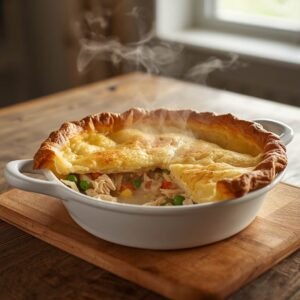
A Complete Meal in One Dish
Chicken pot pie combines several familiar dinner ingredients in a single baked dish. The chicken supplies substance, while mixed vegetables add color and variety. Meanwhile, a savory sauce brings everything together. A pastry covering adds a crisp contrast to the soft filling underneath.
This combination makes the dish suitable for family dinners, casual gatherings, and cooler evenings. It also offers flexibility because cooked chicken and frozen vegetables reduce preparation time. Rather than preparing several separate dishes, home cooks can assemble one satisfying meal. A simple green salad or steamed vegetable makes a suitable side when extra freshness is desired.
Convenience Without Losing Homemade Flavor
A homemade meal does not always require homemade pastry. Refrigerated pie crusts provide a useful shortcut, especially when the filling already needs attention. Similarly, a store-bought rotisserie chicken removes the need to cook raw chicken before assembling the pie.
The sauce remains the part that brings the ingredients together. Butter, onion, garlic, flour, broth, and milk create a savory base with a smooth consistency. Seasonings then build flavor without requiring a long ingredient list. As a result, the finished dish feels thoughtfully prepared while remaining manageable for an ordinary weeknight.
Ingredients for This Easy Chicken Pot Pie Recipe
Chicken, Vegetables, and Seasonings
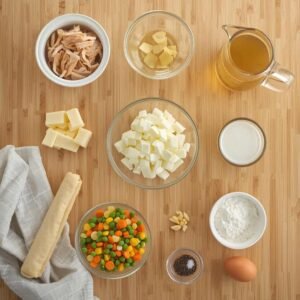
The ingredient list uses common grocery-store staples. One rotisserie chicken supplies the cooked meat, and frozen mixed vegetables save chopping time. A small yellow onion and fresh garlic add depth. Butter and flour form the base of the sauce, while chicken broth and milk provide the liquid.
Italian seasoning, fine sea salt, and black pepper complete the filling. Their amounts can be adjusted slightly to suit personal preferences. However, cooks should taste the sauce before adding extra salt, especially when using a salty broth or seasoned rotisserie chicken.
Pie Crust and Egg Wash
Two refrigerated pie crusts create the bottom and top layers. A deep pie dish helps hold the filling without crowding the pastry. One beaten egg mixed with a tablespoon of water makes a simple egg wash. Brushing this mixture over the top helps the crust develop an attractive golden finish.
A homemade crust can replace the refrigerated version if desired. However, homemade pastry requires additional preparation and chilling time. For a practical family dinner, refrigerated crusts offer a straightforward option. Keep them according to the package directions so they remain easy to handle during assembly.
Complete Ingredient List
- 1 rotisserie chicken, skin and bones removed
- 6 tablespoons butter
- 1 small yellow onion, diced
- 2 garlic cloves, minced
- ⅓ cup all-purpose flour
- 2½ cups chicken broth
- ½ cup milk
- 1 teaspoon Italian seasoning
- 1 teaspoon fine sea salt
- ¼ teaspoon black pepper
- 2 cups frozen mixed vegetables
- 2 refrigerated pie crusts
- 1 large egg, beaten
- 1 tablespoon water for the egg wash
- A little extra butter for greasing the pie dish
- A small amount of flour for rolling the pastry
These quantities make eight servings. Before beginning, gather a deep pie dish, a rolling pin, a large skillet, measuring cups, measuring spoons, and a pastry brush. Having everything ready makes the cooking process easier to manage.
How to Prepare the Filling
Start With the Aromatic Base
First, remove the chicken meat from the bones and discard the skin. Shred the meat into small, manageable pieces and set it aside. Next, place a deep skillet over medium heat and add the butter. Once the butter melts, stir in the diced onion.
Cook the onion for three to four minutes, stirring occasionally. It should soften without becoming deeply browned. Add the minced garlic and continue cooking for about one minute. Keep the heat controlled because garlic can turn bitter when burned. This first stage creates a flavorful foundation for the sauce.
Turn the Flour Into a Smooth Base
Sprinkle the flour over the softened onion and garlic. Stir until the flour absorbs the melted butter and coats the vegetables. Continue cooking for one to two minutes, stirring throughout. This helps cook away the raw flour flavor before the liquid enters the skillet.
Reduce the heat to medium-low before adding the chicken broth. Pour it in gradually while stirring continuously. Adding the liquid in stages helps the flour disperse evenly and reduces lumps. As the mixture heats, it should become thicker and more uniform. If small lumps appear, keep whisking or stirring until the sauce smooths out.
Add Milk and Build the Flavor
Pour in the milk slowly and stir until it blends with the broth mixture. Add the Italian seasoning, salt, and black pepper. Let the sauce simmer gently for about two minutes, stirring regularly. Avoid a vigorous boil because gentle heat makes the texture easier to control.
The sauce should coat a spoon without looking watery. It will continue to cook after the pie enters the oven, so it does not need to become extremely thick in the skillet. However, a sauce that remains very thin may soak into the bottom pastry. Allow a little more simmering time if needed, while keeping the heat low.
Fold in the Chicken and Vegetables
Add the shredded chicken and frozen mixed vegetables to the sauce. Stir until the ingredients are distributed throughout the skillet. Simmer for four to five minutes, giving the vegetables time to warm and the flavors time to combine.
Remove the skillet from the heat once the filling is hot and evenly mixed. Avoid adding extra broth unless the mixture genuinely needs it. Too much liquid can make the pie difficult to slice. If using fresh vegetables instead, cook firm varieties until appropriately tender before assembling the dish.

Assemble the Pie Without Damaging the Crust
Prepare the Bottom Layer
Heat the oven to 375°F. Lightly grease a deep pie dish with butter. Place one refrigerated crust on a lightly floured surface and roll it gently until it extends about an inch beyond the dish’s diameter.
Lift the pastry carefully and position it inside the dish. Press it against the base and sides without pulling it too tightly. Leave a little extra pastry around the rim so it can join the top layer. If a small tear develops, press the edges together gently before adding the filling.
Fill and Cover the Dish
Spoon the chicken mixture into the prepared crust. Spread it evenly so the filling reaches the sides without overflowing. Next, place the second crust over the top. Adjust the pastry gently until it covers the filling completely.
Bring the upper and lower edges together and press them firmly to seal. Crimp the edge with your fingers or a fork. This helps keep the filling inside while the pie bakes. However, avoid pressing so hard that the pastry becomes thin or tears around the rim.
Add the Egg Wash and Steam Openings
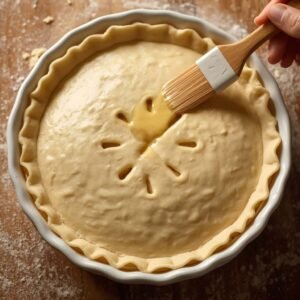
Combine the beaten egg with one tablespoon of water in a small bowl. Use a pastry brush to apply a thin layer across the top crust and edges. This coating encourages an even, glossy brown finish.
Cut several small openings in the center of the pastry. These vents allow steam to escape during baking. Without them, pressure and trapped moisture can affect the crust. Keep the openings small, and avoid cutting through the filling underneath.
Bake, Rest, and Serve
Check the Crust During Baking
Place the assembled pie in the preheated oven. Bake for approximately 35 to 40 minutes, until the pastry looks golden brown and the filling bubbles through the vents or edges. Oven performance can vary, so begin checking the crust as it approaches the end of the expected baking time.
If the rim becomes dark before the top finishes baking, cover the edges loosely with aluminum foil. Avoid opening the oven repeatedly because temperature changes can slow cooking. When the crust is browned and the filling is bubbling, remove the pie carefully and place it on a heat-safe surface.
Give the Filling Time to Set
Let the pie stand for at least 20 minutes before cutting. This waiting period allows the hot filling to settle and makes serving easier. Cutting immediately may cause the sauce to run across the plate, even when the crust looks perfectly baked.
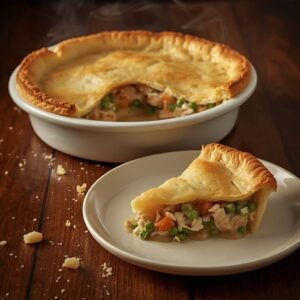
Use a sharp knife to cut the pie into eight portions. A pie server or wide spatula helps lift each piece without breaking the bottom crust. Serve the slices warm, alongside a fresh salad or a simple vegetable side. A little chopped parsley can add color, although it is entirely optional.
Practical Tips for Better Results
Keep the Sauce Thick Enough
The filling’s consistency has a major effect on the finished pie. A loose sauce may soak through the bottom crust, while an excessively thick sauce can feel pasty. Add broth gradually, stir consistently, and allow the flour mixture enough time to thicken before adding the chicken.
Remember that the filling will heat again inside the oven. Therefore, the skillet sauce should be smooth and spoonable rather than stiff. If the sauce looks thin before assembly, simmer it gently for a little longer. This small adjustment can make the final slices easier to serve.
Choose Chicken That Saves Time
Rotisserie chicken is convenient because it is already cooked and easy to shred. However, cooked chicken breast, boiled chicken, or leftover roasted chicken can also be used. Aim for approximately three cups of cooked, shredded chicken when replacing the rotisserie chicken.
Remove all bones before mixing the meat into the sauce. Cut especially large pieces into smaller portions so every slice contains a balanced amount of chicken. If the meat was refrigerated, make sure the finished filling heats thoroughly during preparation and baking.
Make the Vegetable Mix Your Own
Frozen mixed vegetables are useful because they reduce preparation work and provide a range of colors. Fresh carrots, peas, and other suitable vegetables can also be included. Cut fresh ingredients into small pieces so they cook evenly and remain easy to eat.
Potatoes are another possible addition, but they need special attention. Cut them into small cubes and partially cook them before mixing them into the filling. Raw potato pieces may remain firm after the pie finishes baking. Keep additions moderate so the filling remains balanced and the crust has enough room.
Use the Right Baking Dish
A deep pie dish is helpful because the filling needs space beneath the top crust. A shallow dish may leave excess filling or cause spills in the oven. Leave a small amount of room at the top rather than piling the mixture above the rim.
The pastry should cover the filling without being stretched tightly. If the crust becomes too thin, it may tear during baking. A gentle touch during rolling and assembly helps protect the pastry and creates a neater finished pie.
Make-Ahead, Storage, and Reheating
Prepare Parts of the Recipe in Advance
The filling can be prepared ahead and refrigerated in a covered container. When ready to assemble, follow safe food-handling practices and avoid leaving cooked chicken at room temperature for extended periods. Keep refrigerated pastry according to its package directions.
For the best texture, assemble the pie when the filling has cooled sufficiently and the crust remains easy to handle. If preparing the complete pie ahead, account for the time needed to heat the center thoroughly. Check that the filling is hot before serving rather than relying on crust color alone.
Refrigerate Leftovers Properly
Refrigerate leftover chicken pot pie within two hours of cooking. Store it covered, and use the leftovers within three to four days. Divide large portions into smaller containers when necessary so they cool more quickly.
Reheat leftovers until the center reaches 165°F, checking with a food thermometer. An oven can help the pastry regain some crispness, although the texture may differ from a freshly baked pie. Handle leftovers carefully and discard any food that has been stored improperly.
Freeze for Another Dinner
Chicken pot pie can be frozen for a future meal. Wrap it securely in freezer-safe packaging and label it with the date. For best results, protect the pastry from excess moisture and freezer exposure.
Thawing in the refrigerator helps the pie heat more evenly. Reheat it thoroughly and check the center before serving. The crust may soften after freezing, but careful reheating can improve its texture. Always follow safe food-storage practices when preparing meals in advance.
What Goes Well With Chicken Pot Pie?
Light Sides for a Balanced Plate
Because the pie contains chicken, vegetables, sauce, and pastry, a lighter side often works best. A green salad with a simple dressing adds crunch and freshness. Steamed green beans, roasted broccoli, or lightly seasoned carrots also complement the savory filling.
For a larger family meal, roasted vegetables can add variety without requiring much extra preparation. Mashed potatoes are another familiar American comfort food, but they may make the plate quite filling. Choose one or two sides that complement the pie rather than competing with it.
Turn Leftovers Into Another Meal
Leftover chicken can be used in many other dinner preparations. It works well in chicken and rice dishes, simple casseroles, or quick skillet meals. However, keep any reserved chicken refrigerated and use it within the recommended storage period.
If the household enjoys preparing meals ahead, cooked chicken can be portioned for different recipes before the week begins. This makes busy evenings easier without requiring every meal to be cooked from scratch. Plan the portions before adding seasonings so the reserved chicken remains suitable for other dishes.
Frequently Asked Questions
Can This Pie Be Made With Cream of Chicken Soup?
Yes. Another version can use condensed cream of chicken soup as a shortcut for the sauce. However, this recipe makes its own sauce with butter, flour, chicken broth, and milk. The two methods can produce different textures and flavors, so the soup-based version may need different liquid amounts.
Is Rotisserie Chicken Necessary?
No. Rotisserie chicken is convenient, but it is not essential. Cooked chicken breast, boiled chicken, or leftover roasted chicken can all work. Use approximately three cups of shredded cooked meat, remove bones, and cut large pieces into smaller portions before mixing them into the filling.
Does the Bottom Crust Need Blind-Baking?
No. The method described here places the filling directly into the unbaked bottom crust. A properly thickened sauce helps limit excess moisture, and the pie bakes until the pastry is golden. Some cooks may prefer blind-baking for personal reasons, but it is not required for this version.
Can Puff Pastry Replace Refrigerated Pie Crust?
Puff pastry can be used for a different style of chicken pot pie. It produces a lighter, layered topping and may not behave like a traditional double crust. Follow the pastry package directions and adjust the assembly method as needed. The baking time can vary depending on the pastry and dish.
Why Should the Pie Rest Before Serving?
The filling remains very hot immediately after baking. Resting gives the sauce time to settle, helping each slice hold together more neatly. It also makes the pie easier to handle at the table. A rest of at least 20 minutes is recommended before cutting and serving.
Conclusion: Bring a Homemade Favorite to the Table
Chicken pot pie is a practical way to turn cooked chicken, vegetables, and pantry staples into a comforting dinner. The key is to prepare a smooth sauce, avoid excess liquid, handle the pastry gently, and allow enough time for baking and resting. These details make the process easier to manage and improve the texture of the finished dish.
Try this easy chicken pot pie recipe for a family dinner or a relaxed weekend meal. Pair it with a fresh salad or roasted vegetables, and save any leftovers safely for another day. With convenient ingredients and a little preparation, this classic American dinner can fit comfortably into a busy household’s meal routine.