

Why This Chickpea Chaat Is Worth Making

A Quick Solution for Busy Days
Finding a flavorful snack does not always require hours in the kitchen. Many busy home cooks want something filling, fresh, and easy to assemble. This recipe brings cooked chickpeas together with potatoes, vegetables, tamarind, spices, and creamy yogurt. It also creates several textures in one bowl. As a result, it can work for lunch, snacks, parties, or a casual family meal.
A Better Way to Enjoy Chickpeas
Plain chickpeas can sometimes feel repetitive. However, a few fresh ingredients can completely change their flavor and texture. Tangy tamarind adds brightness, while chaat masala provides savory spice. Potatoes add softness, and onions bring freshness. Finally, yogurt, sev, and papri can add creaminess and crunch. This combination makes the dish satisfying without requiring complicated cooking techniques.
What Is Chana Chaat?
A Classic Chickpea-Based Chaat
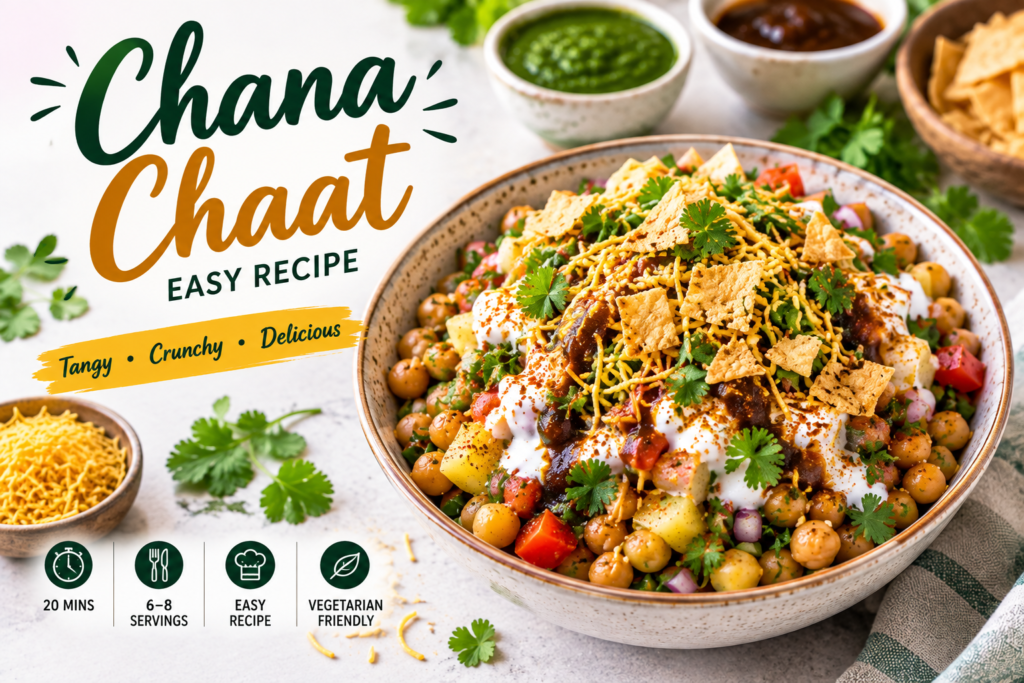
Chana Chaat is a South Asian chickpea dish made by combining cooked chickpeas with vegetables, spices, chutney, and optional toppings. Different families prepare it in different ways. Some versions are simple and dry, while others include yogurt or extra chutney. The common idea is balance. The finished dish should bring together sour, spicy, savory, fresh, creamy, and crunchy elements.
Why the Flavors Work Together
Each ingredient has a specific purpose in the finished bowl. Chickpeas provide substance and a mild earthy flavor. Potatoes create a soft contrast. Tamarind adds sourness, while chaat masala adds depth. Green chilies bring heat, and cilantro adds freshness. Yogurt can cool stronger flavors. Meanwhile, sev and papri create the crisp texture that makes the dish more interesting.
Chana Chaat Recipe at a Glance
Time, Servings, and Difficulty
This recipe is designed as a quick assembly-style dish. Using canned chickpeas keeps the preparation especially convenient for busy cooks in the United States.
- Prep time: 20 minutes
- Cook time: 0–6 minutes if chickpeas need softening
- Total time: About 20 minutes
- Servings: 6–8
- Course: Snack, appetizer, or side dish
- Cuisine: South Asian
- Difficulty: Easy
- Main ingredient: Chickpeas
- Best served: Fresh or chilled
Why Canned Chickpeas Work
Canned chickpeas are convenient and widely available in American grocery stores. They also remove the need for overnight soaking. However, some canned chickpeas can have a firmer texture than expected. Rinsing removes excess canning liquid and helps freshen their flavor. If the chickpeas remain too firm, a short simmer can soften them before mixing.
Ingredients for the Recipe
Chickpeas and Potatoes
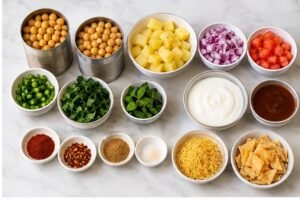
- 2 cans chickpeas, about 15 ounces each
- 2 medium yellow-flesh potatoes
- 1/2 to 3/4 cup finely diced onion
- 1–2 small tomatoes, diced
- 2–3 green chilies, finely chopped
- 1/2 cup chopped cilantro
- 4 fresh mint leaves, chopped
The chickpeas should be drained and rinsed before use. Yellow-flesh potatoes work well because they can stay firm after boiling. The potatoes should be cooled before cutting. This helps prevent them from breaking apart during mixing.
Tamarind and Seasonings
- 1/3 to 1/2 cup tamarind paste
- 2 tablespoons chaat masala
- 1 teaspoon roasted cumin powder
- 1/2 to 3/4 teaspoon red chili powder
- 1/2 teaspoon red chili flakes
- 1 tablespoon sugar
- Salt, only if needed
Tamarind paste provides the main sour flavor. Chaat masala adds savory and tangy seasoning. Roasted cumin brings a warm aroma. Sugar is useful because a small sweet note can balance strong sourness. Salt should be added carefully because both canned chickpeas and chaat masala may already contain sodium.
Optional Toppings
- Plain yogurt
- Sev
- Papri
- Extra cilantro
- Extra chaat masala
- Tamarind chutney
- Green chutney
These toppings are optional, but they can make the final bowl more colorful. Yogurt creates a creamy contrast, while sev and papri add crunch. Chutneys can make the flavor more intense. Therefore, toppings can be adjusted according to the occasion and personal preference.
How to Make Chana Chaat
Step 1: Drain and Rinse the Chickpeas
The chickpeas should first be poured into a colander. They should then be rinsed well under cool running water. This removes the liquid from the cans and gives the chickpeas a cleaner taste. After rinsing, they should be drained thoroughly. Excess water can make the final mixture loose and dilute the tamarind flavor.
Step 2: Soften Firm Chickpeas
Most canned chickpeas can be used immediately. However, some brands may have a firmer texture. If needed, the chickpeas can be placed in a pot of boiling water. They can simmer for about five to six minutes. Afterward, they should be drained again. This short step can make the texture softer without creating mushy chickpeas.
Step 3: Prepare the Potatoes
The potatoes should be boiled until tender but firm. A little salt can be added to the cooking water. A small pinch of turmeric can also provide a warmer color. Once cooked, the potatoes should cool completely. They can then be peeled and diced into bite-sized pieces. Keeping the pieces fairly even helps every serving have a balanced texture.
Step 4: Prepare the Fresh Ingredients
The onion, tomatoes, green chilies, cilantro, and mint should be chopped before mixing. Fresh ingredients provide most of the bright flavor in the dish. The green chilies can be reduced for a milder version. Tomatoes should be drained slightly if they contain a lot of liquid. This helps prevent the finished mixture from becoming watery.
Step 5: Build the Flavor Base
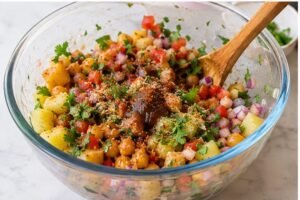
The chickpeas and potatoes should be placed in a large mixing bowl. Onion, tomatoes, green chilies, cilantro, and mint can then be added. The mixture should be folded gently rather than stirred aggressively. This keeps the potato pieces intact. At this stage, the bowl should already have a colorful and fresh appearance.
Step 6: Add Tamarind and Spices
Tamarind paste should be added gradually. Chaat masala, cumin powder, red chili powder, chili flakes, and sugar can then be added. The ingredients should be folded together until evenly coated. It is better to start with less tamarind and adjust later. This allows the cook to control the sourness more easily.
Step 7: Taste and Adjust
The mixture should be tasted before adding extra salt. If the flavor feels flat, more chaat masala can help. If it needs more brightness, a little additional tamarind can be added. If it feels too sour, yogurt or a small amount of sugar can soften the flavor. Gradual adjustments create better flavor balance.
Step 8: Add the Final Toppings
The finished mixture can be transferred to a serving bowl. Yogurt can be spooned over the top or drizzled across the surface. Sev and crushed papri can then be added. Fresh cilantro makes a simple garnish. These toppings should be added close to serving time. That keeps the crunchy ingredients from becoming soft.
How to Make Homemade Imli Paste
What Is Imli Paste?
Imli paste is made from tamarind pulp that has been softened and strained. It provides a strong sour flavor for many South Asian dishes. Tamarind concentrate is much stronger and should not automatically replace paste in equal amounts. For this recipe, regular tamarind paste is easier to control.
Simple Homemade Method
A larger batch can be made when tamarind is available. About 14 ounces of unsalted tamarind can be broken into smaller pieces. It can then be covered with roughly four cups of very hot water. Once the mixture cools enough to handle, the tamarind can be rubbed through the water to loosen the pulp.
The mixture should then be passed through a fine sieve. Seeds, fibers, and tough pieces can be removed during this process. The resulting thick liquid becomes the tamarind paste. It can be refrigerated for short-term use or frozen in small portions. Small portions make future chaat preparation easier.
Tamarind Paste vs Tamarind Concentrate
These two products are not always interchangeable at the same quantity. Tamarind concentrate is generally much stronger. Therefore, using the same volume can make the dish excessively sour. When a substitute is necessary, a small amount should be added first. The flavor can then be adjusted after tasting.
Choosing the Right Chickpeas
Desi Chickpeas
Desi chickpeas are smaller and often have a firmer texture. They can absorb seasoning well and create a hearty bite. They are commonly used in South Asian cooking. However, they may not be available in every American supermarket. Indian or South Asian grocery stores often provide more chickpea varieties.
Kabuli Chickpeas
Kabuli chickpeas are larger and lighter in color. They are widely available in cans across the United States. Their softer texture works well for a quick recipe. They are also convenient because they require no overnight soaking. For a weeknight version, canned Kabuli chickpeas can therefore be a practical choice.
Canned or Dried Chickpeas?
Canned chickpeas save time and simplify preparation. Dried chickpeas offer more control over texture but require additional planning. Dried chickpeas need soaking and cooking before they can be used. For busy American home cooks, canned chickpeas are usually the more convenient option. Either choice can work when the chickpeas are properly cooked and drained.
How to Get the Best Flavor Balance
Keep the Sourness Controlled
Tamarind can be powerful, so it should be added gradually. Different tamarind products also vary in strength. A paste made at home may taste different from a prepared product. Therefore, tasting during preparation is important. The finished dish should taste bright and tangy rather than overwhelmingly sour.
Balance Heat With Creaminess
Green chilies and chili powder can increase the heat quickly. Yogurt provides a cooling contrast when the spice becomes strong. It can also soften the sourness from tamarind. For a family-friendly version, fewer chilies can be used. Adults can then add extra chili or chutney to individual servings.
Use Crunch at the Right Time
Sev and papri should remain dry until serving. Once they touch yogurt or chutney, they begin losing their crisp texture. Therefore, these toppings are best added immediately before eating. For a party, they can also be placed in separate bowls. Guests can then add as much crunch as they want.
Easy Yogurt Topping

Creamy Yogurt Drizzle
A simple yogurt topping can make the dish cooler and creamier. Plain yogurt can be whisked until smooth. A small splash of water or milk can loosen it. A tiny pinch of salt and sugar can create a balanced finish. The yogurt can then be drizzled over individual servings.
How Much Yogurt to Use
The amount depends on personal preference. A small drizzle keeps the chickpea mixture fairly bold. A larger amount creates a creamier dish. The yogurt can also be served separately. This is useful when different guests prefer different levels of creaminess.
Serving Ideas for American Gatherings
Individual Appetizer Cups
Small cups make an attractive option for parties and gatherings. Each cup can contain chickpeas, potatoes, vegetables, yogurt, and toppings. This approach also keeps portions easy to manage. The cups can be prepared shortly before guests arrive. Sev and papri should be added near serving time for the best crunch.
A Build-Your-Own Chaat Bar
A chaat bar can make the dish interactive. The main chickpea mixture can sit in one large bowl. Yogurt, chutneys, sev, papri, cilantro, and extra spices can sit nearby. Guests can then build their preferred combination. This setup works especially well for casual parties and family gatherings.
Phyllo Cup Appetizers
Phyllo cups can turn the mixture into bite-sized appetizers. A small amount of chaat can be spooned into each cup. Yogurt and sev can then be added on top. The cups should be filled shortly before serving. Otherwise, moisture may soften the pastry.
When to Serve This Recipe
Weekday Snacks
The recipe can fit busy weekday schedules because the main ingredients are easy to prepare. Canned chickpeas reduce cooking time significantly. Potatoes can also be boiled in advance. Once the ingredients are ready, the dish comes together quickly. This makes it useful for a snack, light lunch, or simple side.
Parties and Potlucks
Chaat can be a colorful addition to a party table. A large bowl can serve several people. Alternatively, individual cups can make serving easier. A separate topping station gives guests more control. This also allows people to choose between mild, spicy, creamy, or extra-crunchy combinations.
Ramadan and Iftar
Chaat is widely enjoyed during Ramadan and Iftar among South Asian families. Its fresh vegetables, chickpeas, chutneys, and toppings create variety on a larger meal table. The base can be prepared in advance. Fresh onions, cilantro, yogurt, and crunchy toppings can then be added closer to serving.
Make-Ahead Instructions
Prepare the Base Early
The chickpeas and potatoes can be prepared several hours before serving. The spice mixture and tamarind can also be combined in advance. The base should then be covered and refrigerated. This reduces last-minute preparation. However, fresh vegetables and crunchy toppings require more careful timing.
Add Fresh Ingredients Later
Onions and tomatoes can release moisture as they sit. Cilantro can also lose some freshness over time. Therefore, these ingredients are best added closer to serving. This is particularly important when the dish is prepared the previous day. Keeping the fresh components separate helps preserve the final texture.
Add Toppings at the End
Yogurt, sev, and papri should remain separate until serving. This prevents the crunchy elements from absorbing moisture. Chutneys can also be added individually. As a result, the dish can maintain a better texture even when the main mixture was prepared earlier.
Storage and Leftovers
Refrigerating the Prepared Mixture
The basic chickpea mixture should be placed in an airtight container and refrigerated. Fresh toppings should ideally be stored separately. This is especially important for sev and papri. The mixture should be checked before serving again. If it has thickened, a small amount of yogurt or chutney can help refresh the texture.
Why Fresh Toppings Matter
Crunchy toppings do not store well after they have absorbed moisture. Yogurt can also change the texture of the chickpeas over time. Therefore, storing components separately gives better results. This approach also allows leftover servings to be customized later.
Common Mistakes to Avoid
Adding Too Much Tamarind
Too much tamarind can overpower every other flavor. It may also make the dish taste sharply sour. Therefore, it should be added in small amounts. The flavor should be checked after mixing. More can always be added, but correcting excessive sourness is harder.
Overcooking the Potatoes
Very soft potatoes can break apart during mixing. They can also make the mixture feel heavy. Potatoes should therefore be tender enough to eat while remaining firm. Cooling them before cutting also makes them easier to handle.
Adding Salt Too Early
Chaat masala can already contain salt. Canned chickpeas may also contain sodium. Therefore, extra salt should be added only after tasting. This small step can prevent an overly salty final dish.
Mixing Crunchy Toppings Too Soon
Sev and papri lose their texture when exposed to moisture. They should therefore stay separate until the dish is ready to eat. This simple change can make a noticeable difference. The same principle applies to other crispy toppings.
Chana Chaat Variations
Kala Chana Chaat
Kala chana creates a firmer and earthier variation. These darker chickpeas hold their shape well after cooking. The same tamarind, onion, cilantro, and spice elements can be used. This version works well for people who prefer a stronger chickpea texture.
Chole Chaat
Chole chaat is another chickpea-based variation. The terminology can differ across regions and recipes. It may include potatoes, chutneys, yogurt, spices, or fresh herbs. The overall concept remains similar. Chickpeas provide the base while toppings create contrasting flavors and textures.
Aloo Cholay
Aloo cholay combines chickpeas and potatoes in a savory preparation. It can be served warm rather than cold. The seasoning can also be different from a classic chaat. Therefore, it is useful for readers who enjoy chickpeas but want a heartier alternative.
Samosa Chaat
Samosa chaat uses samosas as the main base. Yogurt, chutneys, chickpeas, spices, and crunchy toppings can then be layered over them. It creates a more substantial appetizer. The same flavor principles apply, especially the contrast between tangy, creamy, spicy, and crunchy components.
Frequently Asked Questions
What is Chana Chaat made of?
It is made primarily with cooked chickpeas. Potatoes, onions, tomatoes, cilantro, green chilies, tamarind, and chaat masala can build the main mixture. Yogurt, sev, papri, and chutneys can be added as toppings. The exact combination can change depending on personal taste and the style being prepared.
Can canned chickpeas be used?
Yes, canned chickpeas are convenient for this recipe. They should be drained and rinsed before mixing. If they feel too firm, they can be simmered briefly in boiling water. This creates a softer texture while keeping the preparation quick. Canned chickpeas are especially practical for busy American home cooks.
Is Chana Chaat served hot or cold?
This version is designed as a cold or room-temperature dish. The cooked ingredients should be cooled before they are mixed with the fresh components. Chilled yogurt can then provide an especially refreshing contrast. However, other chickpea dishes, such as aloo cholay, can be served warm.
Can the recipe be made less spicy?
Yes. Green chilies, chili powder, and chili flakes can all be reduced. Yogurt can also help soften the heat. Mild chutney can replace a hotter option. For family gatherings, keeping the base mild and offering spicy toppings separately can work particularly well.
How can Chana Chaat stay crunchy?
Crunchy toppings should be added immediately before serving. Sev and papri should remain separate from the wet ingredients until the final step. The chickpeas and potatoes should also be properly drained. These simple steps help maintain the contrast between soft, creamy, and crisp textures.
Nutrition and Portion Notes
A Balanced Snack Option
Chickpeas provide plant-based protein and dietary fiber. Potatoes contribute carbohydrates, while vegetables provide freshness and texture. Yogurt can add additional protein and calcium. However, nutrition can vary considerably depending on portion size and toppings. Extra sev, sugar, chutney, and yogurt can change the final nutritional profile.
Portion Control for Parties
For an appetizer table, smaller cups can provide manageable portions. A larger bowl can work when the dish is being served as a side. Portion size can also be adjusted based on the other foods being served. Keeping toppings separate gives guests more control over the final serving.
Final Recipe Checklist
Before Serving
The finished dish should have tender but firm chickpeas. Potatoes should remain intact rather than mashed. Tamarind should provide brightness without overpowering the spices. The seasoning should taste savory, tangy, and mildly spicy. Finally, yogurt and crunchy toppings should be added according to preference.
The Best Texture Comes From Timing
The base can be prepared ahead, but the final toppings should wait. Fresh herbs and vegetables should be added close to serving. Yogurt should be added according to the desired creaminess. Sev and papri should be added last. This timing creates the strongest contrast between soft, creamy, fresh, and crisp elements.
Conclusion
A Simple South Asian Dish for Modern Kitchens
This chickpea recipe brings together familiar ingredients with bold South Asian flavors. It does not require advanced cooking skills or complicated equipment. Canned chickpeas make the preparation convenient for American kitchens. Meanwhile, tamarind, chaat masala, vegetables, yogurt, and crunchy toppings create a layered eating experience. Because the recipe is flexible, it can easily be adjusted for different spice and texture preferences.
A Recipe for Snacks, Parties, and Family Meals
The recipe can be served as an appetizer, snack, side dish, or party food. It can also be prepared ahead when the toppings are kept separate. For gatherings, individual cups or a build-your-own chaat bar can make serving easier. Therefore, this recipe can fit both everyday meals and special occasions.
Final CTA
Readers looking for a fresh and flavorful snack can add this recipe to their regular meal rotation. The chickpea base can be customized with different toppings, spice levels, and chutneys. For the best result, the dish should be assembled shortly before serving. That final step keeps the flavors bright and the crunchy toppings crisp.

Leave a Reply