
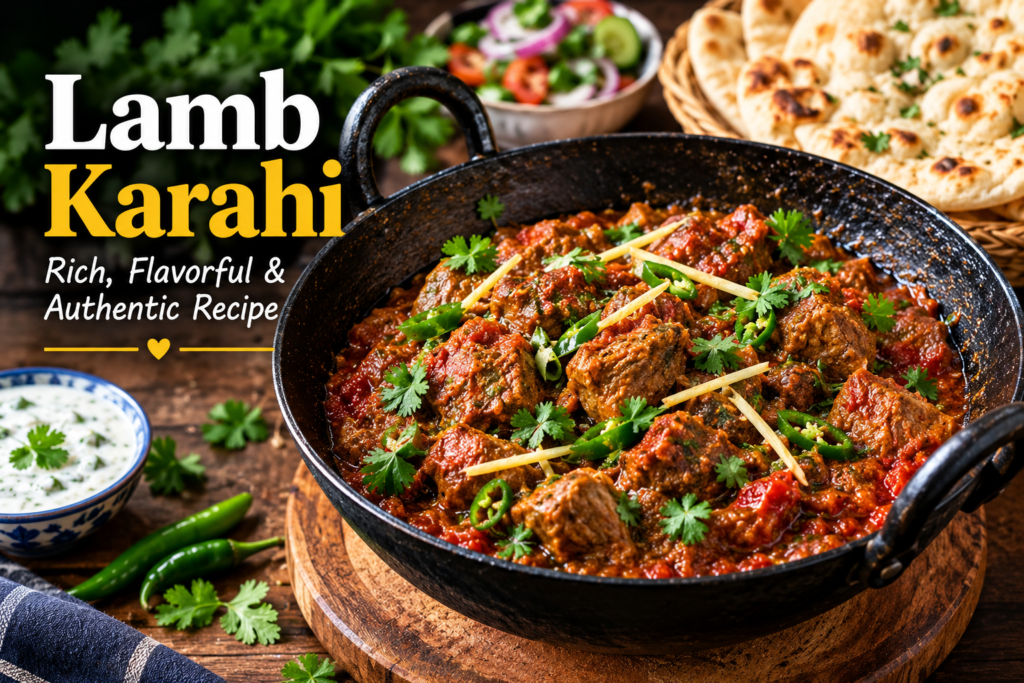

Why This Lamb Karahi Deserves a Place on the Dinner Table
Many home cooks want a hearty dinner that feels different from ordinary meat dishes. However, rich curries can sometimes depend on heavy sauces, long ingredient lists, or complicated preparation. That can make a special dinner feel harder than it needs to be. A well-prepared lamb karahi offers another approach. It builds its character around meat, tomatoes, ginger, garlic, spices, and fresh finishing ingredients.
For cooks in the United States, this style of dish can also bring something new to the dinner table. The recipe follows the traditional idea of karahi gosht while keeping the cooking process practical for a home kitchen. The sauce becomes thick and glossy as the tomato moisture cooks away. Meanwhile, fresh coriander and green chilli add a bright finish. The result is a deeply flavored red meat curry with a memorable texture.
What Is Lamb Karahi?
Understanding Karahi Gosht
Karahi is both a dish style and the name of the wok-like pan traditionally associated with it. The curry is known for a strong tomato, ginger, and garlic base. Unlike many other Pakistani curry styles, a traditional version does not depend on onions or yogurt for its main masala. Instead, tomatoes provide much of the body while ginger and garlic create the strong savory character.
The term karahi gosht refers to meat prepared in this cooking style. Lamb can be used in place of mutton, with cooking time adjusted for the meat. The same basic idea also appears in mutton karahi and other karahi dishes. Because of that, readers may also see terms such as lamb kadai, kadai lamb, karahi lamb, or lamb krahi when searching for similar dishes online.
How It Differs From Other Curries
A karahi curry has a different structure from dishes such as Lamb Bhuna, Korma, Dopiaza, or Jalfrezi. Those dishes can use different combinations of onions, yogurt, or other ingredients. Traditional karahi instead puts greater attention on tomatoes, ginger, and garlic. Capsicum may appear in some restaurant versions, but it is not essential to the basic style.
This distinction matters because a thick red curry is not automatically a traditional karahi. The cooking process also matters. Tomatoes are cooked at high heat until their moisture reduces. Then the masala becomes thick, glossy, and able to cling to the meat. This concentrated sauce gives the dish its recognizable character without needing a large amount of gravy.
Ingredients That Build the Flavor
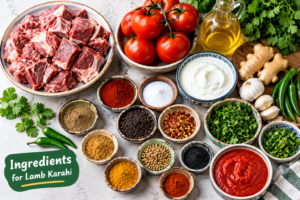
Lamb, Tomatoes, Ginger, and Garlic
The main ingredients create the foundation of the dish. Bone-in lamb is especially useful because the meat and bone bring a deep, meaty character to the cooking liquid. Fresh tomatoes provide moisture and acidity. Fresh ginger and garlic then give the masala its strong aromatic base. Together, these ingredients create a sauce that becomes richer as it reduces.
The ingredient list can also include salt, paprika or Kashmiri red chilli powder, black pepper, chilli flakes, cumin powder, coriander powder, and optional nigella seeds. Green chillies provide extra heat, while chopped coriander gives the finished dish a fresh herbal note. Finally, thin strips of ginger can be added over the top for another fresh layer.
Why Fresh Ingredients Matter
Fresh ingredients are especially important in this style of cooking. Fresh tomatoes release natural juice as they cook, while fresh ginger and garlic give the masala a sharper aroma. Fresh coriander and green chilli also provide a crisp finishing flavor. Therefore, cooks should give these ingredients attention rather than treating them as minor additions.
Tinned or jarred ingredients can change the final character of the dish. Fresh tomatoes are particularly important because the tomato-heavy masala depends on their flavor and moisture. If substitutions become necessary, the tomato balance should still remain strong. This helps preserve the thick, tomato-centered character expected from a good karahi.
Choosing Lamb or Mutton
Lamb for a Shorter Cooking Time
Lamb and mutton can both work in this recipe, but they do not behave exactly the same way. Lamb generally cooks faster, making it useful when a shorter cooking period is preferred. Mutton can require considerably longer cooking and can develop a deeper, richer meat flavor during that time.
For a USA-focused recipe, lamb can be a straightforward choice when the cook wants to work with the lamb available to them. However, the exact cooking time should not be treated as an absolute rule. Meat can vary by cut, size, toughness, and moisture. Therefore, tenderness should guide the final cooking decision.
Why Bone-In Meat Is Useful
Bone-in meat is preferred because the bone contributes deeper meaty flavor during cooking. Boneless lamb can still be used, but it may require adjustments to the cooking stage. Smaller boneless pieces can also cook differently from larger bone-in pieces. Therefore, the meat should be checked rather than relying only on a timer.
The same principle applies to mutton ribs or other meat cuts. The important goal is tender meat with very little excess water remaining before the tomatoes are added. If the meat remains tough, additional covered cooking can help. If excess water remains, it should be reduced before the tomato stage begins.
How to Cook Lamb Karahi
Step 1: Brown the Meat
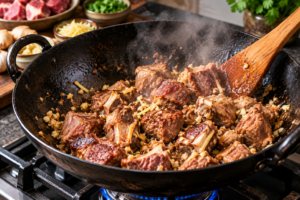
The process begins by heating oil or ghee in a karahi, wok, or suitable heavy pan. The lamb is added over high heat and stirred until its surface changes color. This first stage gives the meat a strong start before the aromatics and spices enter the pan.
Next, fresh minced ginger and garlic are added. They need only a short period of frying before the spices and water are introduced. The goal is to remove their raw smell without allowing them to become overly dark. This creates a strong aromatic foundation for the later tomato masala.
Step 2: Cook the Meat Until Tender
After the ginger and garlic have been briefly cooked, the spices, salt, and water are added. The pan is then covered and the heat is reduced. The meat cooks gently until it becomes almost tender. During this stage, the amount of water needs attention because the pan should not become excessively dry too early.
Cooking time can vary from kitchen to kitchen. Meat type, cut, moisture, and cooking conditions can all affect the result. Therefore, a cook should check the lamb during the process. If it remains tough, it needs more covered cooking. If the pan contains too much water, that moisture should be reduced before the tomatoes are added.
Step 3: Add the Tomatoes
Once the meat is nearly cooked and excess water has been reduced, finely chopped tomatoes are added. The heat is raised, and the tomatoes cook without the lid. Frequent stirring helps break the tomatoes down and prevents the mixture from sticking heavily to the pan.
At first, the pan may appear surprisingly watery because tomatoes release a large amount of juice. That is normal during this stage. Instead of adding more thickening ingredients, the mixture needs time and high heat. Gradually, the tomato moisture evaporates and the masala becomes more concentrated.
Step 4: Create the Thick Masala
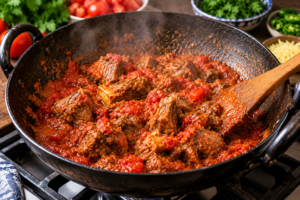
The key transformation happens as the tomato mixture reduces. The sauce should become thick, glossy, and concentrated. It should cling to the lamb rather than sitting around it like a thin curry. Oil may also become visible around the edges or rise toward the surface.
This stage requires attention because the sauce can change quickly once much of its water has disappeared. Frequent stirring helps distribute the heat and keeps the masala moving. The final texture should feel rich and jammy rather than watery. This concentrated finish is one of the defining features of karahi cooking.
Step 5: Finish With Fresh Ingredients
When the masala reaches the desired consistency, chopped coriander and sliced green chilli can be added. The heat is then lowered, and the mixture can simmer briefly without the lid. This short final stage allows the fresh ingredients to settle into the sauce without losing their character.
Finally, more coriander and thin matchsticks of fresh ginger can be used as a garnish. The finished dish should be served hot. The strong tomato masala, tender meat, fresh herbs, and chilli create a combination that works especially well with bread and cooling side dishes.
Making the Recipe Work in a US Home Kitchen
Choosing the Right Cooking Equipment
A traditional karahi works well, but a wok or heavy skillet can also be used. The important part is having enough surface area for the meat and tomato mixture. High heat is especially useful when reducing the tomatoes because the goal is to drive off moisture and concentrate the sauce.
An Instant Pot can also support parts of the cooking process. The sauté function can be used for the early stages, while pressure cooking can shorten the covered meat-cooking stage. However, the final tomato reduction still needs attention. The sauce must be reduced properly rather than left watery.
Using an Instant Pot
For cooks using an Instant Pot, the initial meat and aromatic stages can be completed using the sauté setting. The spices and appropriate water can then be added before pressure cooking. After pressure cooking, any remaining moisture should be reduced using the sauté function.
This approach can be convenient for home kitchens, but the same texture goal remains important. The tomatoes still need to cook down into a thick masala. A pressure cooker can soften the meat, but it does not replace the final high-heat reduction. Therefore, the cooking method can change while the desired sauce texture stays the same.
Serving Ideas for Lamb Karahi
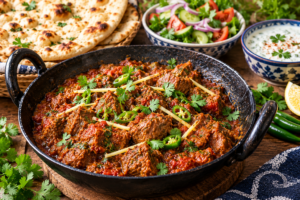
Naan, Salad, and Raita
Hot naan is a natural partner for karahi because the thick masala can be scooped up easily. A finely chopped cooling salad adds a fresh contrast to the rich meat and tomato sauce. Raita can also provide a cool side element that balances the stronger flavors.
For a complete dinner, these simple sides can keep the meal balanced without competing with the main dish. The karahi remains the center of the plate while naan, salad, and raita provide different textures and temperatures. Fizzy drinks can also accompany the meal for a casual dinner setting.
A Larger Pakistani-Style Spread
For a larger meal, karahi can be served with dishes such as Tadka Dal. The softer, soupy texture of dal provides a contrast to the thick karahi sauce. Another option is a broader KPK or Afghanistani-inspired spread with Kabuli Pulao and yogurt-based sides.
Borani and Mast o Khiar can also appear as cooling accompaniments in such a spread. These combinations give the meal more variety while keeping the lamb karahi as the main meat dish. The goal is not to overwhelm the table, but to provide contrasting textures and flavors.
Common Mistakes to Avoid
Adding Too Much Water
One common problem is leaving too much water in the pan before adding the tomatoes. The tomato stage already introduces substantial moisture. If the meat mixture is still very watery, the final sauce can take much longer to become thick.
Therefore, the meat should be nearly tender before the tomato stage begins. If excess liquid remains, the cook should reduce it first. This simple step helps the tomatoes concentrate more effectively and makes it easier to reach the desired glossy masala.
Rushing the Tomato Reduction
Another mistake is stopping the tomato cooking too early. The mixture may look finished because the tomatoes have softened, but soft tomatoes are not the same as concentrated karahi masala. The sauce needs to lose enough moisture to become thick and cling to the meat.
Patience is especially important during this part of the recipe. The cook should keep the heat high, stir often, and watch the texture. Once the oil begins appearing around the edges and the sauce becomes thick, the final coriander and green chilli can be added.
Frequently Asked Questions
Is Lamb Karahi the Same as Mutton Karahi?
Lamb karahi and mutton karahi follow the same basic cooking style. Both use meat cooked with a tomato, ginger, garlic, and spice-based masala. The major practical difference is cooking time. Lamb generally reaches tenderness faster, while mutton can require longer cooking. Therefore, the choice can depend on availability, preferred texture, cooking time, and desired depth of flavor.
Can Boneless Lamb Be Used?
Boneless lamb can be used when bone-in meat is not preferred or available. However, bone-in meat is favored because the bone contributes deeper meaty flavor during cooking. Boneless pieces may also require different cooking time and water. The most reliable approach is to monitor the meat and sauce rather than following a fixed timer without checking.
Can Onion Be Added to Lamb Karahi?
Traditional karahi does not require onion in its main masala. The main character comes from tomatoes, ginger, and garlic. However, the reference method also discusses situations where cooks may need to stretch the masala. In those cases, finely diced onion can be used as an adaptation. This changes the traditional texture and flavor, so it should be treated as a variation.
Can Yogurt Be Used in the Masala?
Traditional karahi is not built around yogurt. Its thick sauce comes mainly from tomatoes cooked down with the meat and aromatics. However, yogurt can be used as a practical adaptation when the cook needs to stretch the tomato-heavy masala. Full-fat thick yogurt works better for this purpose than a thin yogurt because the goal is to maintain a substantial sauce.
Can Beef Be Used Instead?
Beef can be adapted for this cooking style, but it generally needs more cooking time than lamb or mutton. The covered cooking stage may need additional time and water until the meat becomes tender. After that, the process can continue with the tomato stage. The same texture rule still applies: excess moisture should be reduced before the tomatoes are added.
Final Thoughts on Lamb Karahi
A well-made lamb karahi shows how a small group of ingredients can create a deeply satisfying meat dish. The key is not an overloaded masala. Instead, the flavor comes from lamb, fresh tomatoes, ginger, garlic, spices, coriander, and green chilli. Careful heat control then transforms those ingredients into a thick sauce that coats the meat.
For USA home cooks exploring Pakistani food, this dish offers a clear introduction to the karahi style. It can be prepared with a wok, heavy skillet, karahi, or suitable pressure cooker. Most importantly, the cook should focus on tenderness, moisture control, fresh ingredients, and tomato reduction. Those details make the difference between a thin meat curry and a concentrated karahi gosht.
A Simple Way to Serve It
The finished dish is best brought to the table hot with naan, fresh salad, and a cooling side such as raita. For a larger gathering, Tadka Dal, Kabuli Pulao, Borani, or Mast o Khiar can expand the meal. The combination creates a table with contrasting textures while keeping the rich meat dish at the center.
For readers searching for lamb kadai, kadai lamb, karahi lamb recipe, or lamb gosht, this cooking style provides the same core idea under familiar names. The spelling may change to krahi, kahrah, or another variation, but the central concept remains a tomato-rich meat dish cooked with fresh aromatics and finished with a thick masala.
Conclusion: Bring Karahi Gosht to the Dinner Table
A satisfying karahi does not need a complicated ingredient list. It needs good meat, fresh tomatoes, generous ginger and garlic, careful cooking, and enough patience to reduce the sauce properly. Once the masala becomes thick and glossy, the dish is ready for a hot naan and fresh side dishes.
For home cooks exploring Pakistani cuisine, this recipe offers a flavorful way to prepare red meat without relying on an overly heavy sauce. The cooking process rewards attention, especially during the meat and tomato stages. Try this lamb karahi for a rich homemade dinner, then serve it hot with naan, salad, and a cooling side.

Leave a Reply